角色檔案名冊其十九
普靜
要角 · 岱嶽雪洞修行的神異高僧,先救月娘,後度孝哥並薦拔群魂,收束全書因果。
- 性別
- 男
- 年齡
- 年長成年男性,確切年齡未載
- 身份
- 岱嶽東峯雪澗洞修行高僧,後在永福寺度化孝哥並為群魂薦拔
- 性格
- 慈悲 / 洞察因果 / 堅定守諾 / 不受財物 / 言語直截
外貌
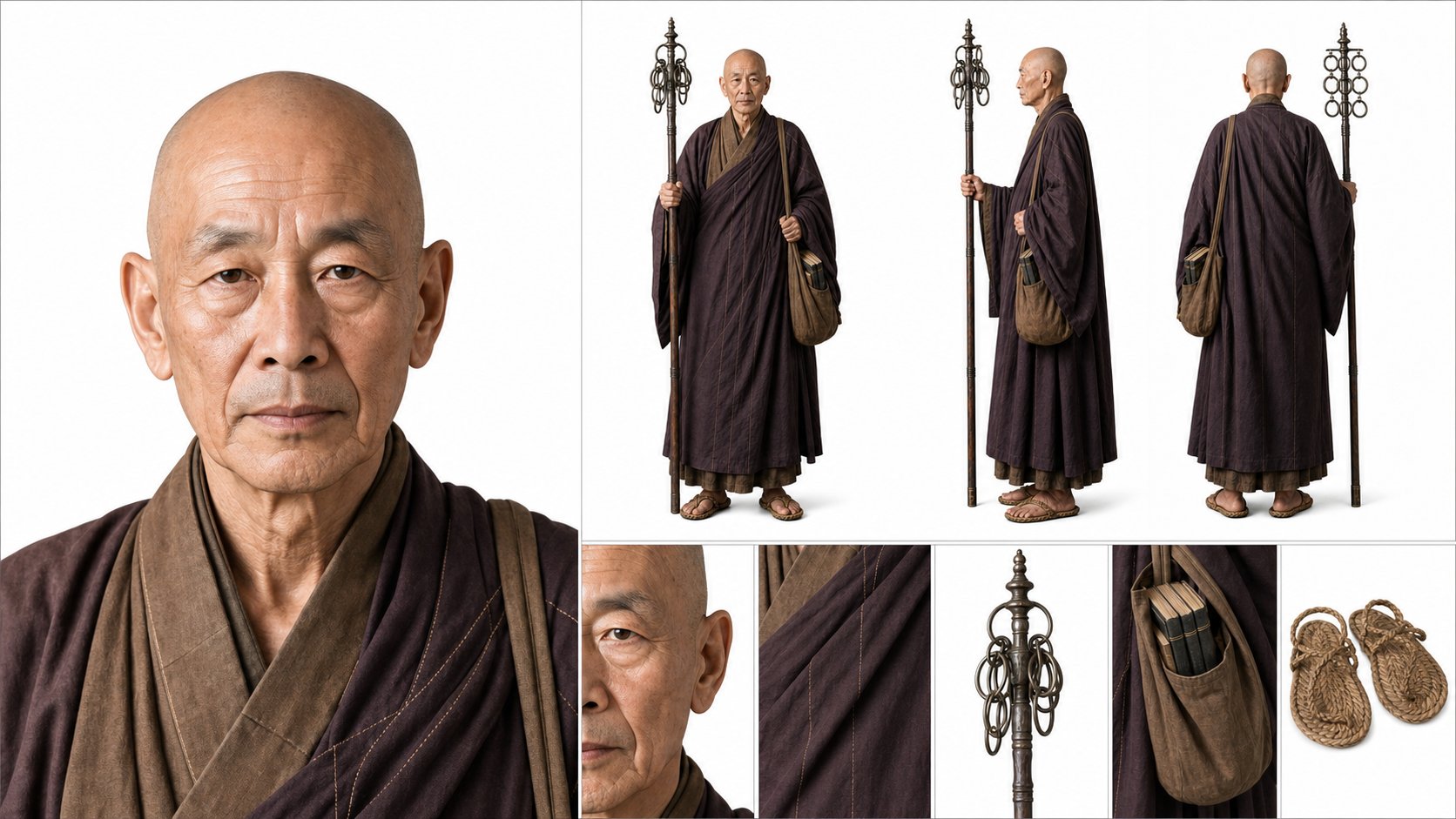
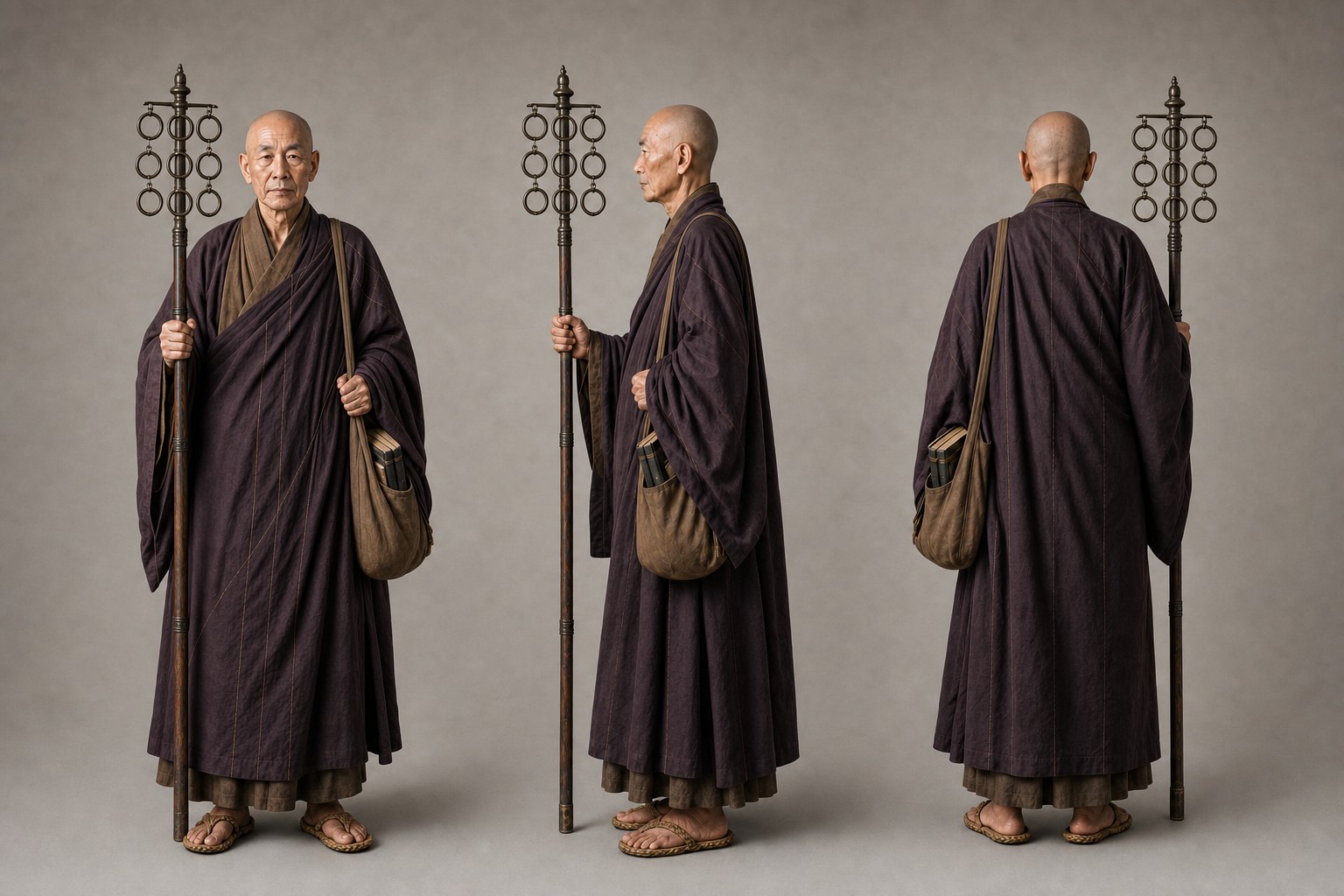
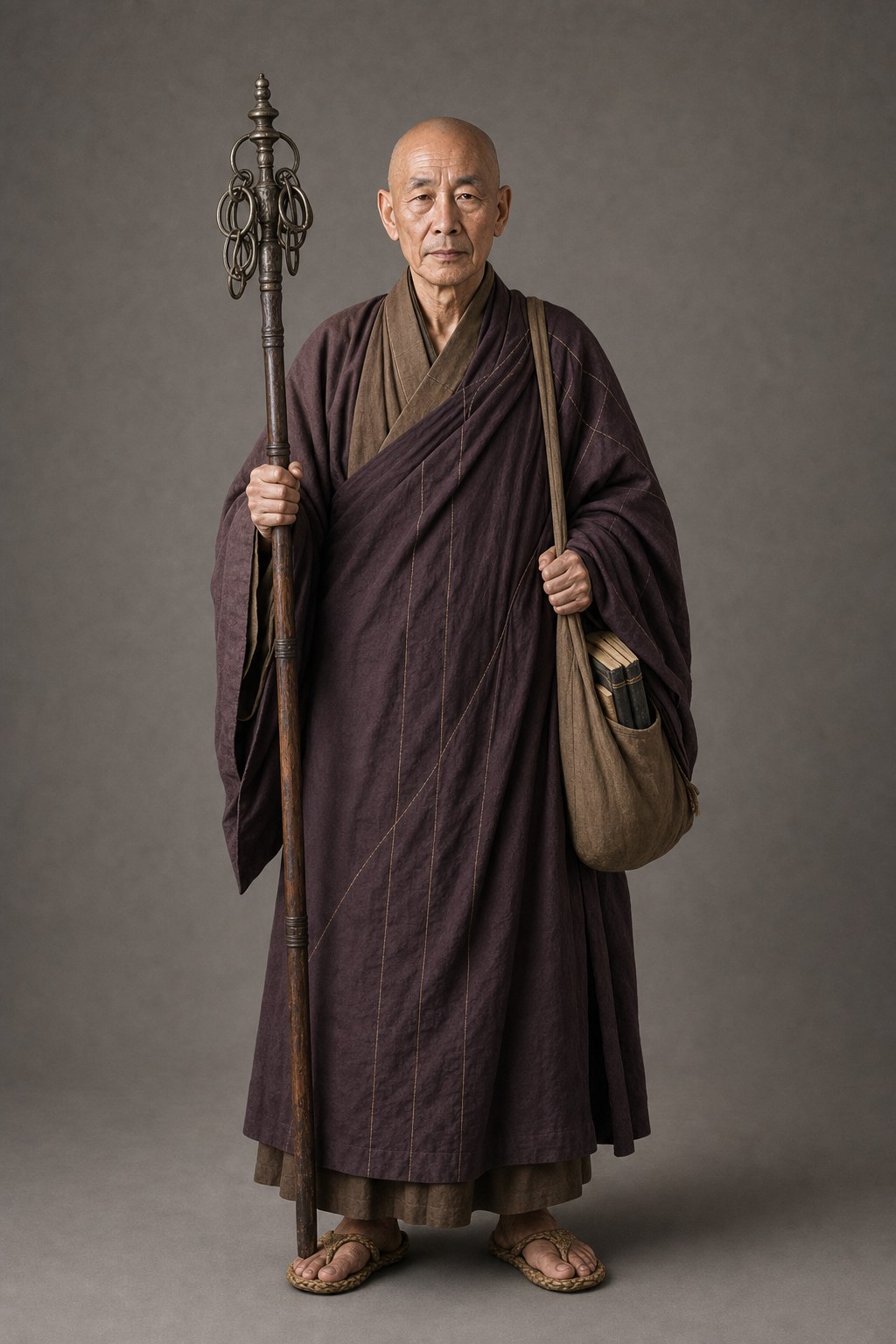
原典稱其為老僧、雪洞老和尚,末回明載身披紫褐袈裟、手執九環錫杖、腳穿芒鞋、肩背布袋與經典。五官、身材與實際歲數未載;年長感可據稱謂推斷。
性情
平靜而不柔弱,面對危難先安定眾人,談及宿願與出家時則堅定、不與世俗討價還價;誦咒薦拔時莊嚴清明。(推斷)
動機
救人脫險、履行十年前收徒因緣,並以佛法化解眾人累積的冤業,使孝哥與群魂各得解脫。
人物弧光
第八十四回在雪澗洞收留逃難的吳月娘一行,拒收布匹並約定日後度其子;第百回亂世重逢,帶眾人入永福寺,度孝哥出家,誦咒薦拔西門家及相關亡魂,完成全書宗教收束。
人物關係
- 吳月娘先在岱嶽危途中救她投宿,並與她約定日後收其親生子為徒。
- 明悟禪師十年前預定的弟子;亂世重逢後被他度化出家。
- 吳大舅第八十四回同行求助者;他向其說明雪洞去路並保護整隊過夜。
- 吳二舅末回對收徒提出世俗反對者;他仍堅持宿願並引眾人到永福寺。
- 西門慶末回受其經咒薦拔的亡魂之一,得以另行託生。
- 周秀戰死後受其薦拔的亡魂之一。
原文依據
以下逐字引自《金瓶梅詞話》(萬曆本)原典,是這份角色側寫的文本根據。
視覺版本
同一個角色的另一份視覺材料:擬真攝影風的選角母版。以下全部為 AI 生成影像,並非真人照片。
AI 選角檔案
虛擬劇組的工作底稿:把原典證據翻譯成給 AI 的設定指令,再由指令生成上方的角色視覺與聲音方向。完整方法見影像工作室。
形象設定指令(給圖像模型)
Adult live-action historical character photography, sacred documentary realism, natural aged skin, Chinese Buddhist monastic wardrobe, not CGI
設定描述(中文)真人古裝選角攝影:明確成年的年長佛門僧人,約六十五至七十五歲的選角推斷,面容清瘦風霜、眼神平靜透澈。穿紫褐袈裟與土色僧衣、芒鞋,持一杖,杖頭明確裝有九個可逐一辨識的獨立鬆環,背裝有經典的布袋。材質磨舊但整潔,無神光與奇幻裝飾;洞口晨光、自然老化皮膚與真實麻布木金屬質感。
設定描述(英文原稿)Full-body casting portrait of a clearly adult elderly Chinese Buddhist monk portrayed between sixty-five and seventy-five, with natural aged skin, a lean weathered face, calm penetrating eyes, and an upright walking posture. He wears an authentic dark purplish-brown kasaya over muted earth-colored monastic robes, straw sandals, and carries one khakkhara staff fitted with exactly nine individually separated loose metal rings plus a plain cloth shoulder bag holding bound scriptures. The materials are worn but carefully maintained; there is no jewelry, magical glow, or fantasy ornament. Real human actor, live-action historical religious wardrobe, realistic skin, hemp, wood, and metal texture, soft dawn light at a simple cave entrance, restrained documentary cinematography, dignified non-sexualized adult, absolutely not illustration, not anime, not CGI, not a 3D render. Elderly casting is inferred from the source calling him an old monk; exact age and facial details are not stated.排除條件(negative prompt)
child, teenager, minor, youthful childlike face, sexualized pose, nudity, fetish styling, illustration, anime, manga, painting, concept art, CGI, 3D render, game asset, doll-like skin, fantasy costume, modern clothing, modern objects, neon color, glamour retouching, text, watermark, logo, extra limbs, extra fingers, distorted hands, duplicate person, inconsistent wardrobe三視圖指令
Three-view live-action costume reference of the same clearly adult elderly Chinese Buddhist monk portrayed between sixty-five and seventy-five: front, strict side, and back full-body views with identical lean aged proportions, naturally weathered inferred face, shaved head, dark purplish-brown kasaya, earth-colored robes, straw sandals, one staff per view, exactly nine individually separated loose metal rings on each staff, twenty-seven rings total across the three views, cloth shoulder bag, and bound scriptures. Neutral upright pose, all views aligned on one ground line. Real human actor, authentic monastic garment construction, realistic aged skin, hemp, wood, and metal texture, even soft studio daylight, plain light-gray background, no aura, no magic effects, no text, no illustration, no anime, no CGI, no 3D render. Elderly age and facial details are inferred.
聲音設定(給語音模型)
音色:沉靜乾淨的年長男低音,略帶歲月磨出的沙質,胸腔與口腔共鳴均衡。(推斷);音高:低音域,平穩不虛弱,關鍵句略上提以保持清晰。(推斷);語速:語速緩而不拖,停頓充足;勸誡與誦偈時節拍端正、字字可辨。(推斷);口音:以北方官話為底,帶長年雲遊僧人的清楚通行發音。(推斷);情緒:預設慈悲、洞察與安定;涉及宿願與因果時堅定,不帶怒氣卻不容推諉。(推斷);類比:像一位在危途石洞中先讓眾人安住、十年後仍平靜履行收徒之約的年長高僧。(推斷)
聲音描述(中文)年長而明確成年的男低音,聲線沉靜乾淨,帶少量歲月形成的沙質,但不能虛弱。語速緩慢而有方向,每個停頓都像留出思考與安定他人的空間;勸誡時不責罵,卻以穩定下沉的句尾表明不可推諉。誦偈與經咒要節拍端正、字字清楚,保持人聲真實,不加入神祕特效。口音以北方官話為底,像長年雲遊而能讓各地人聽懂的僧人。(推斷)
聲音描述(英文原稿)An adult male voice perceived as elderly. A calm, clean bass with a low pitch, a slight age-worn grain, balanced chest and oral resonance, and very little breathiness; the voice must remain steady rather than frail. Keep the pace slow but purposeful and the rhythm spacious, using ample pauses that create room for reflection and reassure others. Admonitions should never sound scolding, yet their gently descending endings should make responsibility inescapable. For verses and sutra chanting, use an even, disciplined cadence with every word clearly articulated. Use Northern Mandarin with the clear, broadly intelligible pronunciation of a monk who has wandered for many years. Maintain low-to-medium but unwavering energy. The default emotion is compassionate, perceptive, and serene, becoming firm when speaking of vows, causality, or consequences, never angry. Keep the voice natural, add no mystical effects, and design a consistent voice rather than performing a specific line.
定妝設計圖
開拍前的完整定裝一頁看完:大頭特寫、三面全身,加上隨身道具的細節。以本頁核准的身份形象為基準生成——同一位普靜、同一張臉,換一種說明書式的呈現。圖為 AI 生成,並非真人照片。